
Waterfront Park
Use the responsible operator’s current information to confirm entrances, hours, activity rules and any fees or reservations. This destination is not represented as an amenity included with a home.
Official details ↗


+1-858-888-1111
Kindred Real Estate Group
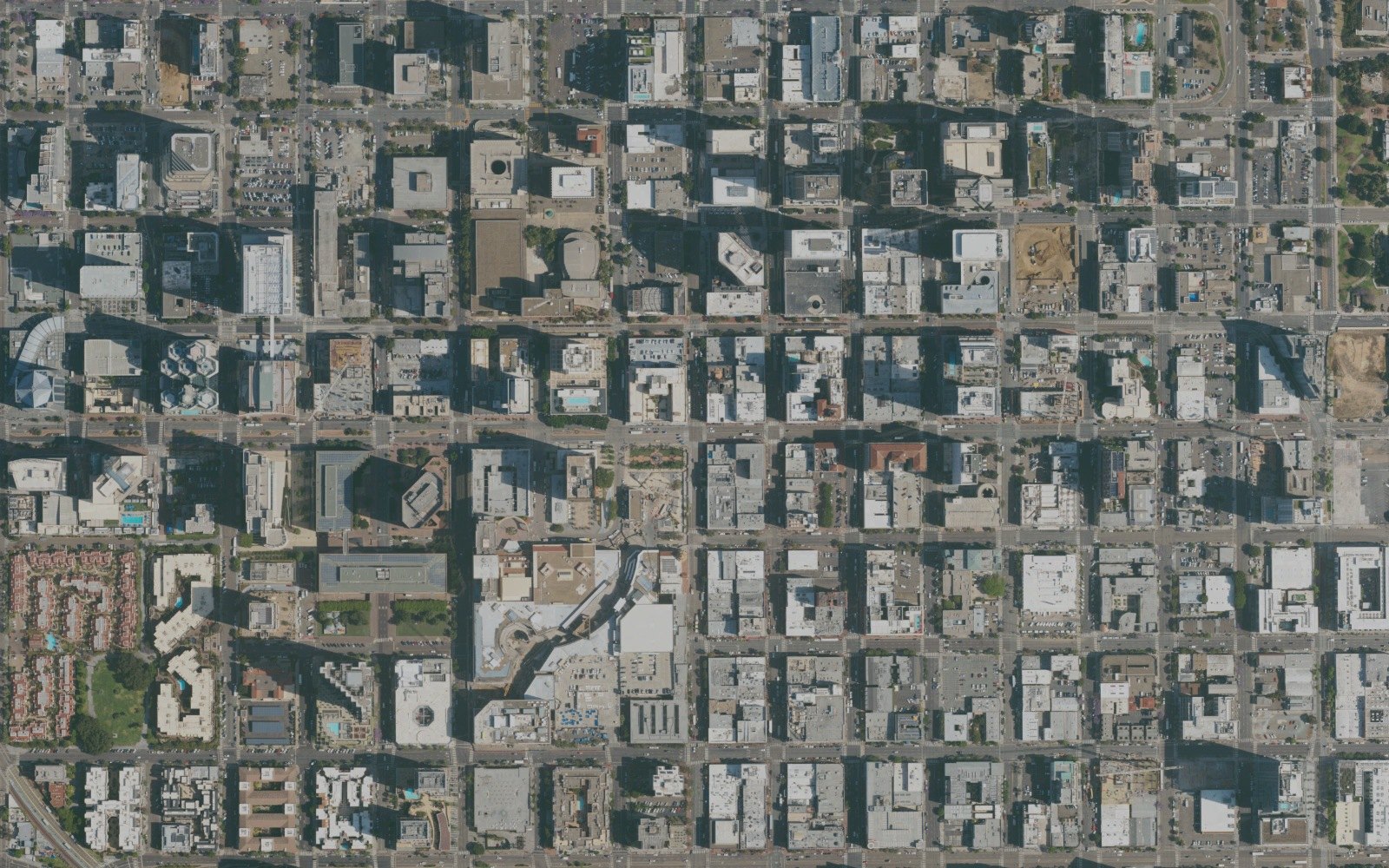
Downtown brings together waterfront high-rises, historic commercial blocks, the ballpark district and major transit connections.
ACTUAL LOCATION AERIAL · USDA NAIP / USGS · PUBLIC DOMAIN · HISTORICAL IMAGERYSpeak with Kindred Real Estate
Connect with Kindred for buyer and seller guidance.
Downtown brings together waterfront high-rises, historic commercial blocks, the ballpark district and major transit connections. Start with the district, then compare the individual building and its ownership costs.
Urban housing, older residential streets and major public destinations sit close together here. Compare the immediate block, building systems, parking and the route to everyday services rather than relying on a broad central-city label.
Municipal limits, ZIP codes, school districts and community names overlap. Confirm the exact property’s jurisdiction and postal address.
David shares his perspective from roughly seven years of living in downtown San Diego—from East Village to Little Italy—and explains how neighborhood character, HOA dues and building finances shape a condo purchase.
Presented by David Rudd
Co-founder, Kindred Real Estate Group at Compass
CA DRE #01402946 · 1 minute 45 seconds
Meet David & read his biography →
Hi, I'm David Rudd with Kindred Real Estate at Compass. I've lived in different parts of downtown San Diego for roughly seven years, from East Village to Little Italy, and a few buildings right along the neighborhood borders. I've also been inside every downtown high-rise. There are buildings I absolutely love, and others where I'd advise clients to look carefully before buying.
That's because downtown isn't one neighborhood, and buying here is about much more than choosing a floor plan or a view. East Village offers a vibrant urban lifestyle, with Petco Park, restaurants, and great places to walk. You'll also encounter more visible homelessness in some areas. The experience can change quite a bit from block to block.
As you move west toward the waterfront, you'll generally find higher prices per square foot, more upscale dining, and often less visible homelessness. You'll also find buildings with substantial HOA dues. And let's talk about those dues, because they deserve a closer look.
In some full-service high-rises, monthly dues can run $1,500 to $2,000 or more. That's a significant expense. But you should compare what's included. Depending on the building, dues may cover water, trash, building insurance, exterior maintenance, security, and amenities—expenses you'd otherwise pay separately, or budget for as a single-family homeowner.
You'll still need your own condo insurance, and special assessments can be an additional cost. The question is, what are you getting for those dues, and how well is the building managed and maintained?
When we help clients buy downtown, we look beyond the views. We consider the building's finances, reserves, maintenance history, and how the location fits your everyday life.
I love living downtown. Finding the right neighborhood and the right building is what makes the difference. Text me Downtown for our complete Downtown San Diego neighborhood guide.
David’s observations reflect his personal experience. Neighborhood conditions and building costs vary. Confirm current HOA dues, inclusions, insurance, reserves and special assessments for the specific condominium.
The marker is an approximate orientation point for Downtown San Diego in San Diego County. It is not a neighborhood, municipal, HOA, ZIP or school-attendance boundary. Confirm the exact property separately.
Pan and use + / − to zoom. Open a larger map ↗. Basemap: OpenStreetMap contributors. SANDAG regional GIS sources and data disclaimer ↗.
Public destinations, nearby outings and access conditions are identified separately.
Use the responsible operator’s current information to confirm entrances, hours, activity rules and any fees or reservations. This destination is not represented as an amenity included with a home.
Official details ↗Use the responsible operator’s current information to confirm entrances, hours, activity rules and any fees or reservations. This destination is not represented as an amenity included with a home.
Official details ↗Use these named shopping and dining corridors to test an ordinary routine. Individual businesses, parking arrangements and hours can change; the guide does not guarantee walking distance from every home.
Official details ↗Start with Little Italy, Gaslamp Quarter and the waterfront. Compare the actual route from the property, including parking, crossings and any hillside or freeway approach. Visit at the hours you normally shop or dine; a nearby commercial district does not establish a convenient walk from every residential block.
Check current business hours and access directly. Nearby destinations are not represented as inside every neighborhood.
Actual Downtown San Diego area aerial · USDA NAIP / USGS · 2022 imagery selection · public domain. This is an orientation photograph, not a listing or boundary survey.
Important connections include Trolley lines, Santa Fe Depot and I-5. Test your regular journey from the exact address in both directions. Check the operator’s current route, frequency and service notices before relying on transit; no fixed commute time is implied.
Downtown cultural programming and neighborhood public spaces provide ways to explore this part of the city. Check the exact district and venue in the current calendar; a waterfront or ballpark event may be a nearby outing rather than an event inside this neighborhood.
Downtown San Diego Partnership neighborhood directory ↗ · San Diego Tourism Authority community and event information ↗School information is a starting resource, not a guarantee of attendance.
Start with San Diego Unified School District. Use the county school finder to confirm the responsible district, then verify the current school assignment for the street address, grade and enrollment year directly with that district. Nearby campuses and real-estate neighborhood names do not establish attendance rights.
San Diego County Office of Education district directory ↗ · San Diego Unified School Finder ↗Confirm the street address, grade, enrollment year and eligibility with the district. Check any transition, transfer or special-program requirements separately. Do not infer assignment from the nearest campus or a real-estate marketing label.
Compare the individual property and the alternatives a buyer would actually consider.
The local ownership review should address condominium reserves, master insurance, special assessments, parking rights and rental restrictions. Compare the same housing type and ownership structure before adjusting for condition, lot utility or outlook. Obtain the recorded documents and inspect the actual improvements rather than inferring rights or condition from the neighborhood name.
This guide provides context, not a current valuation, price forecast or representation of available inventory.
Review the current secured tax bill and the parcel-specific assessment detail. Confirm any community facilities district (Mello-Roos), bond, benefit assessment or other fixed charge with the responsible agency. A neighborhood name or ZIP code does not establish whether a particular home has a charge.
County tax-bill resources ↗Review master and sub-association dues, reserves, insurance, maintenance responsibilities and any pending assessment. Ask which public facilities, resident amenities and private memberships are actually included with the property.
These verified Kindred totals cover each entire ZIP code, including properties outside this guide’s neighborhood. They are not counts limited to the named community.
Downtown brings together waterfront high-rises, historic commercial blocks, the ballpark district and major transit connections. Start with the district, then compare the individual building and its ownership costs. A postal ZIP, community name, planning area and association boundary are different references. Confirm the specific property’s jurisdiction and recorded obligations.
Visit Waterfront Park, locate an everyday shopping or dining stop, then test the route back to the exact property. Repeat a regular travel period if commuting matters. Check public entrances rather than assuming a direct connection.
The marker is an approximate orientation point for Downtown San Diego in San Diego County. It is not a neighborhood, municipal, HOA, ZIP or school-attendance boundary. Confirm the exact property separately.
No. ZIP codes are postal geography, not attendance boundaries. Verify the exact address, school year and grade with the responsible district.
Review the association’s reserves, current budget, master insurance, assessments, major building systems, litigation disclosures, parking and storage rights, and rental restrictions. A ZIP-wide sales count does not describe a particular building’s condition or finances.
No. Public parks, commercial venues, private clubs and resident-only building amenities have different rules. Obtain written confirmation of any property-specific access or membership.
Start with the same competing setting, property type and ownership obligations, then account for documented condition, size, lot utility and current competition. A broad city or ZIP label is not a complete pricing analysis.
Bring the address, your priorities and your questions.
Get instant property value now!